Everyone uses AI now. Almost nobody can prove they're good at it.
Nearly everyone under forty uses AI at work, and the wage premium attached to AI skills went up again this year. Those two facts should not be able to coexist, because premiums come from scarcity and there obviously isn't any.
The usual explanation is that the premium is temporary, a bubble that closes once everyone catches up. That doesn't hold either, because everyone already has caught up. The tools are free, they take an afternoon to learn, and adoption is close to universal in every knowledge job. If the premium were paying for access or familiarity it would have collapsed by now.
What resolves it is much simpler and much more awkward. The question can't tell two completely different activities apart.
Two skills wearing one word
Somebody using AI to tidy up an email and somebody who has automated two thirds of their job both answer yes to "do you use AI at work". They tick the same box on the same survey and arrive in the same statistic, while doing things that have almost nothing in common.
One of them has a slightly better email. The other has a system that runs without them.
That isn't a difference of degree, it's a different category of thing entirely, and the gap between those two people is the whole story of what's being paid for. The premium isn't rewarding AI use. It's rewarding the small number of people doing the second thing, and the number looks paradoxical only because the measurement can't see the difference.
Why the good ones are invisible
Here's where it gets difficult for the second person.
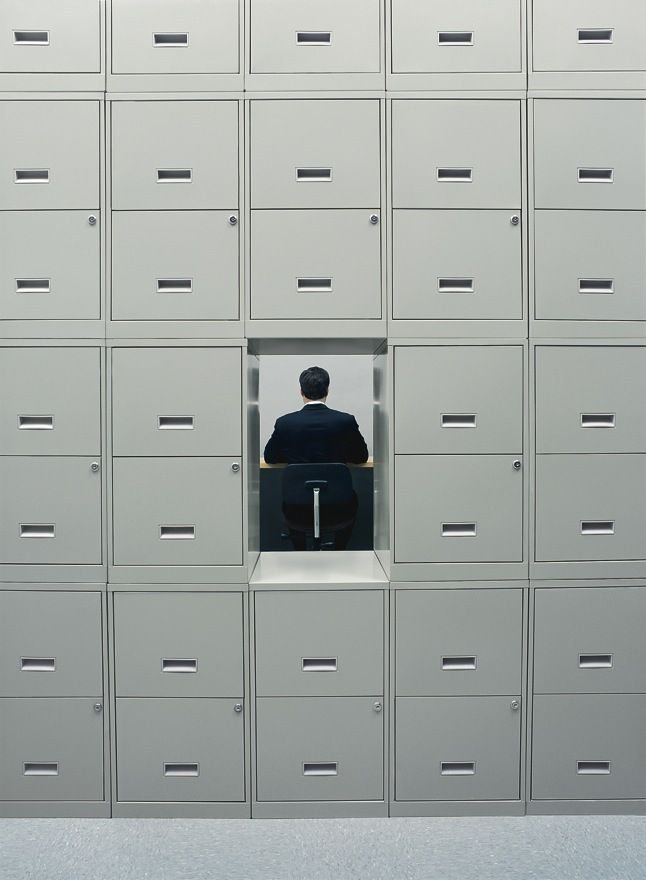
Nobody sees the system. What leaves the building is the work it produces, and work looks like work. A finished report arrives looking finished whether it took four days of careful effort or was one of nine that ran overnight. The person receiving it has no way of telling, and no particular reason to ask.
So the person who rebuilt their entire function ends up being judged on output that is indistinguishable from somebody who did it the slow way. Their actual achievement, the thing they built, never gets looked at by anyone.
This is the part that inverts everything. The more thoroughly you've automated something, the more completely you've hidden it. The reward for being good at this is that your competence becomes invisible, because competence now shows up as the absence of effort rather than the presence of it.
Every conventional way of proving it has been flattened by the same technology. Saying you're good at AI means nothing when everyone says it. Naming the tools means nothing when the tools are free and identical. Showing the finished work means nothing, because output no longer carries information about the person who produced it.
What's left
The only thing that still separates the two people is the part nobody ever thought was worth showing anyone.
Which bits you decided to hand over, and which you deliberately kept. What you asked for, and how many times you sent it back. Where you noticed the answer was confidently wrong, and how you knew.
That's reasoning, and it's the one thing the person tidying emails cannot produce, because they haven't done any. There is no reasoning involved in pasting a paragraph in and accepting what comes back. The judgment is the entire skill, and it lives in the decisions rather than in the result.
Which means the finished work has quietly become the least useful evidence anybody has, at exactly the moment everyone got much faster at producing it.
Making the machinery visible
If the reasoning is what's being paid for, it has to sit somewhere a person can see it, which is an odd task, because for the whole of working history the machinery was the part you cleaned up before showing anyone.
Take one process you've rebuilt. Not the whole job, one process. Then capture five things, in this order.
One, the before. A screenshot of the old version. The spreadsheet, the folder of documents, the inbox rule, whatever it looked like when you were doing it by hand.
Two, the setup. A screenshot of the prompt or the automation as it stands, unedited. Not a tidied version written for an audience.
Three, the rejection. A screenshot of something the model produced that looked right but wasn't, with your reply telling it why. This is the most valuable image in the set, because it's the only one proving you were reading rather than accepting.
Four, what you kept. A note on the part you decided not to hand over. The decision to leave something manual is usually the sharper judgment. It is never recorded anywhere.
Five, the result. Whatever changed. The time it takes now, the error rate, the fact that it happens on a Tuesday morning without you.
Five images, about twenty minutes, and at the end of it you're holding the one kind of evidence that hasn't been devalued. Not a claim that you're good at this. Not an output any tool could have produced. A record of the decisions only you made.
Most people won't do it, because showing the process feels like showing rough workings rather than finished work. That instinct made sense when the finished work carried the information about who made it. It doesn't any more.
There's a guide on posting a workflow as screenshots if you want the practical version of that, covering what to capture and what to leave out.
Work Flow
Like this? Subscribe to get it first.
Every Tuesday: one essay on AI, portfolio careers and the future of work. Plus a workflow that's actually useful.