Everyone has a hobby now and nowhere to be bad at it
Run clubs are everywhere at the moment and they are full. So is padel, so is pottery, so is climbing, so is bouldering, so is sea swimming in water nobody should be getting into. The usual read on this is that people came out of the last few years wanting to be healthier, which is true enough, but it is not the whole thing.
Because none of it is free.
The run club has a membership. The kit costs more than the membership. There are race entries, there is the travel to the race, and there is the coffee afterwards which is where the actual social part happens. What presents itself as a free activity is functioning as a paid subscription to a group of people, and once every free way of seeing anyone has quietly disappeared, that is a reasonable thing to buy. Forty pounds a month for a guaranteed twelve hours of company is better value than most of the alternatives.
But it does mean something has changed underneath. Community became a thing you subscribe to rather than a thing you fall into. And once you are paying for something, you start expecting a return on it, even if you would never say that out loud.
The thing that happened to hobbies
A hobby was supposed to be the one place you were allowed to be mediocre and nobody minded. That was the definition of it. The word itself carries an implication of harmlessness, of something that does not have to justify itself.
Now every single one has a route to money attached. Four sessions into pottery and somebody tells you that you could be selling these. One run posted and somebody asks when the coaching page is going up. It is always meant kindly. It is a compliment. And it moves the entire thing, because the moment an activity has a plausible audience sat next to it, your practice starts happening with a camera somewhere in the room.
What that does is switch the goal underneath you without asking. You stop optimising for getting better and start optimising for not looking stupid, and those two want completely opposite behaviour from you.
Getting better requires being visibly bad for a long stretch. Not looking stupid requires never attempting anything you cannot already do.
You cannot run both. So people run the second one, because the second one is the safe one, and the consequences arrive slowly.
What it costs
The first cost is that people stop starting things. You see it in adults refusing to take up anything they cannot be passable at inside a month, which rules out most instruments, most sports, most languages and most crafts, so the list of available hobbies quietly narrows to the ones with a fast on ramp.
The second cost is subtler. The activities that survive are the ones that look good, because if the reps are going to be seen then the aesthetic is doing real work. Which is why the boom is concentrated in the photogenic ones. Running has a kit and a route map and a finish line. Pottery has a wheel and clay on your hands. Both of them film beautifully. Learning to sight read music does not film at all, so almost nobody is starting that.
The third cost is that the thing you do for pleasure turns into a thing you do for evidence. And once it is evidence, it is work. You have not gained a hobby, you have added an unpaid second job with a subscription fee.
Tennis is the clearest version of this
Take learning tennis at thirty. In principle it is a solved problem, you book a court and you hit balls until you get better. In practice it is close to impossible to do privately, because tennis needs a second person, and a second person is a witness whose time you know you are wasting every time you send one into the fence.
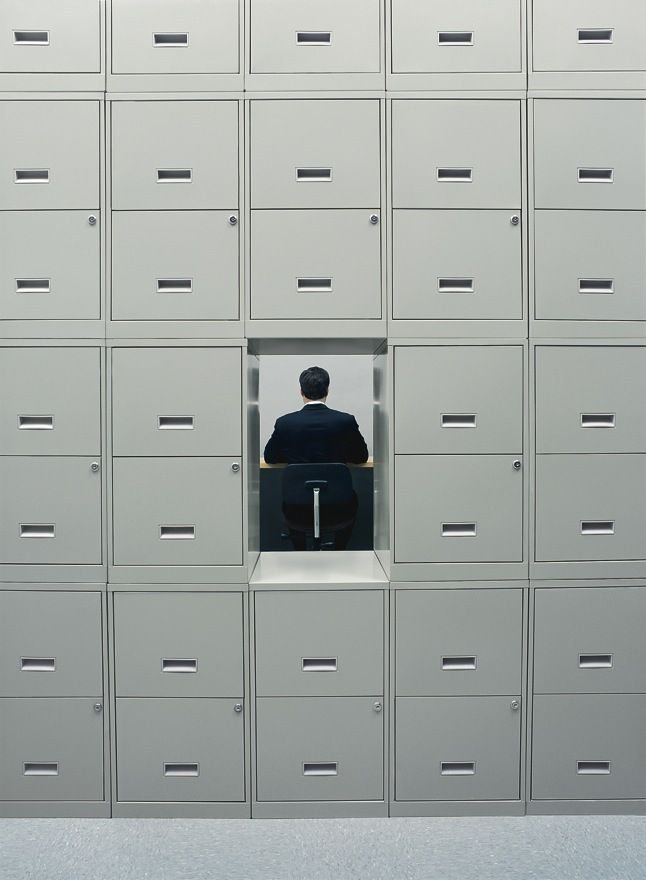
There is no closed folder for tennis. Writing has one, you can write badly for two years and delete it. Drawing has one. Tennis is public by design, and most physical skills are the same, which is exactly why adults quit them and children do not. Children do not carry humiliation.
So the question is whether you can manufacture a private space that no longer exists naturally. You can. It just has to be built on purpose.
The workflow
This is the version I would run for any physical skill. It takes about ten minutes to set up and the whole point of it is to remove the witness.
One. Name the artefact, not the ambition
Not get better at tennis. One thirty minute session against a wall or a ball machine, twice a week. The unit has to be a thing you can tick, because ambitions cannot be ticked and so they cannot be sustained.
Two. Film every session, from the same spot
Phone on a fence or a bag, wide enough to see your whole body, same angle every time. This is the part that feels stupid and it is the part that does all the work. The angle has to be consistent or you cannot compare anything later.
Three. Keep the clips in one dated folder and show nobody
Not a highlight reel. Everything, including the sessions that went badly, named by date. The folder is the private space. It is the closed room that hobbies used to come with and no longer do.
Four. Use AI as the critic instead of a person
Upload a clip and give the model a named reference rather than a vague standard. Not how is my serve. Something closer to: here is my serve, compare it against a textbook continental grip service motion, and tell me the three biggest differences in sequence, from the ground up.
Two rules on this. Ask it to mark the gap, not to fix you, because with a physical skill the correction has to be found by your own body or it does not stay. And do not accept a general answer. Push until you get something specific enough to attempt on Thursday.
The reason this matters is that the cost of being bad in front of a person is reputational and permanent, and the cost of being bad in front of a model is zero. That asymmetry is the whole opportunity. It is the closest thing we have to the privacy that used to be free.
Five. Compare eight weeks apart, never one week apart
This is the step people skip and it is the reason most of them quit. You cannot feel improvement in a physical skill week to week. The gains are too small and your standards rise at roughly the same rate as your ability, so it feels like standing still even when it is not. Most people quit at around a month, convinced nothing is happening.
Two clips eight weeks apart settle that argument permanently. That is what the dates are for.
Six. Surface only when there is a body of it
If you ever want to show anyone, and you do not have to, the first thing they see should be attempt forty rather than attempt one. Not because attempt one is shameful, but because a trajectory is a more interesting thing than a snapshot and only you can see the trajectory if the folder does not exist.
Why any of this is worth doing
The obvious version of this argument is that hobbies are good for you and you should protect them, which is true and boring.
The less obvious version is that the ability to be bad at something for a sustained period without an audience is a capability, and it is being lost across the board rather than only in hobbies. It is the same capability that lets you change career, or start a business, or learn a new skill at forty when you are already senior at something else. All of those require an extended stretch of being visibly worse than the people around you.
If the only place you ever practised being bad was your hobby, and your hobby now has a camera in it, then you have nowhere left to build that tolerance at all. Which is a much bigger problem than tennis.
Work Flow
Like this? Subscribe to get it first.
Every Tuesday: one essay on AI, portfolio careers and the future of work. Plus a workflow that's actually useful.